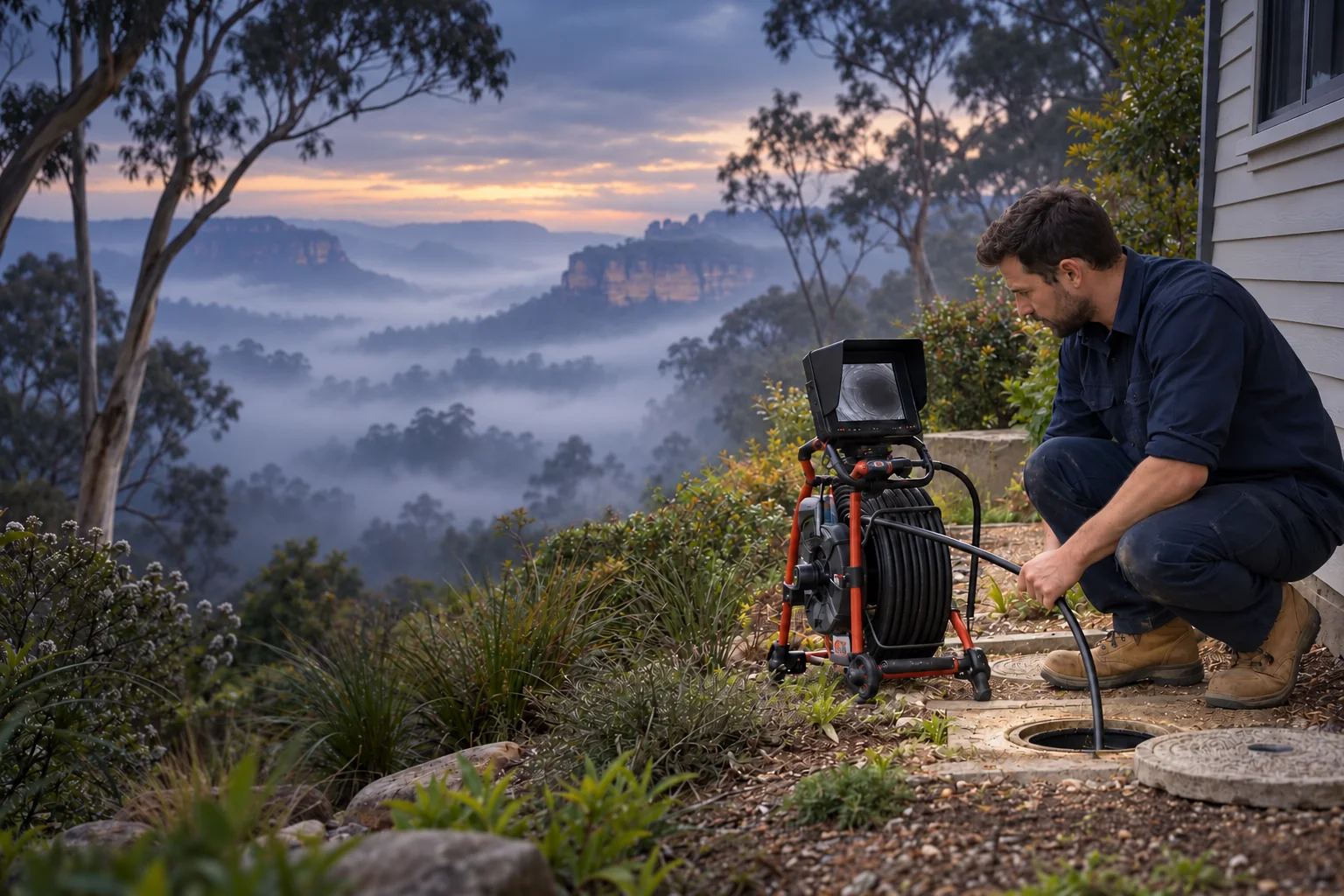
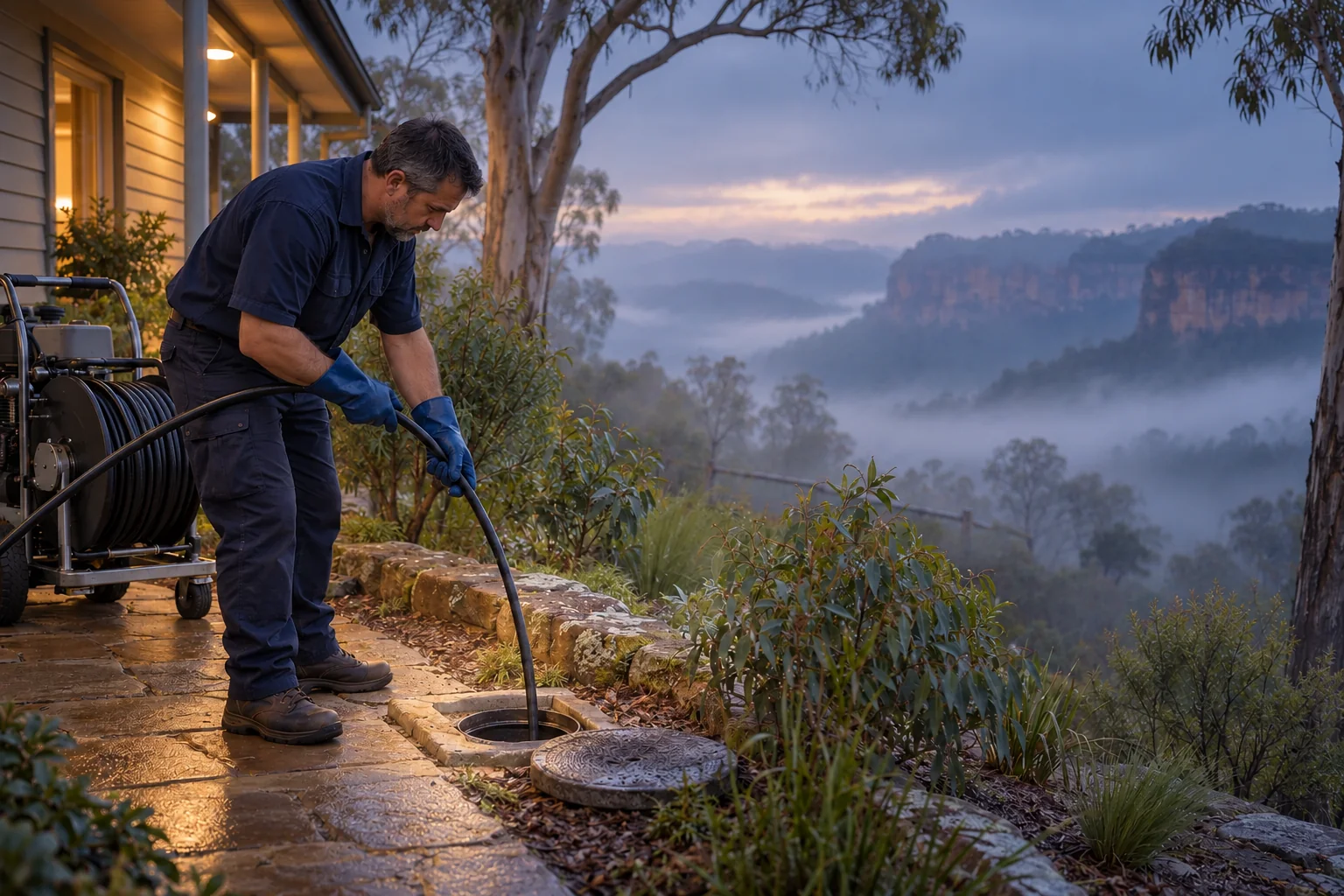
Water pooling near a grate, pit or driveway after rain can have several causes. The starting point is to describe where the water collects, how it behaves after rainfall and which drainage points appear affected.
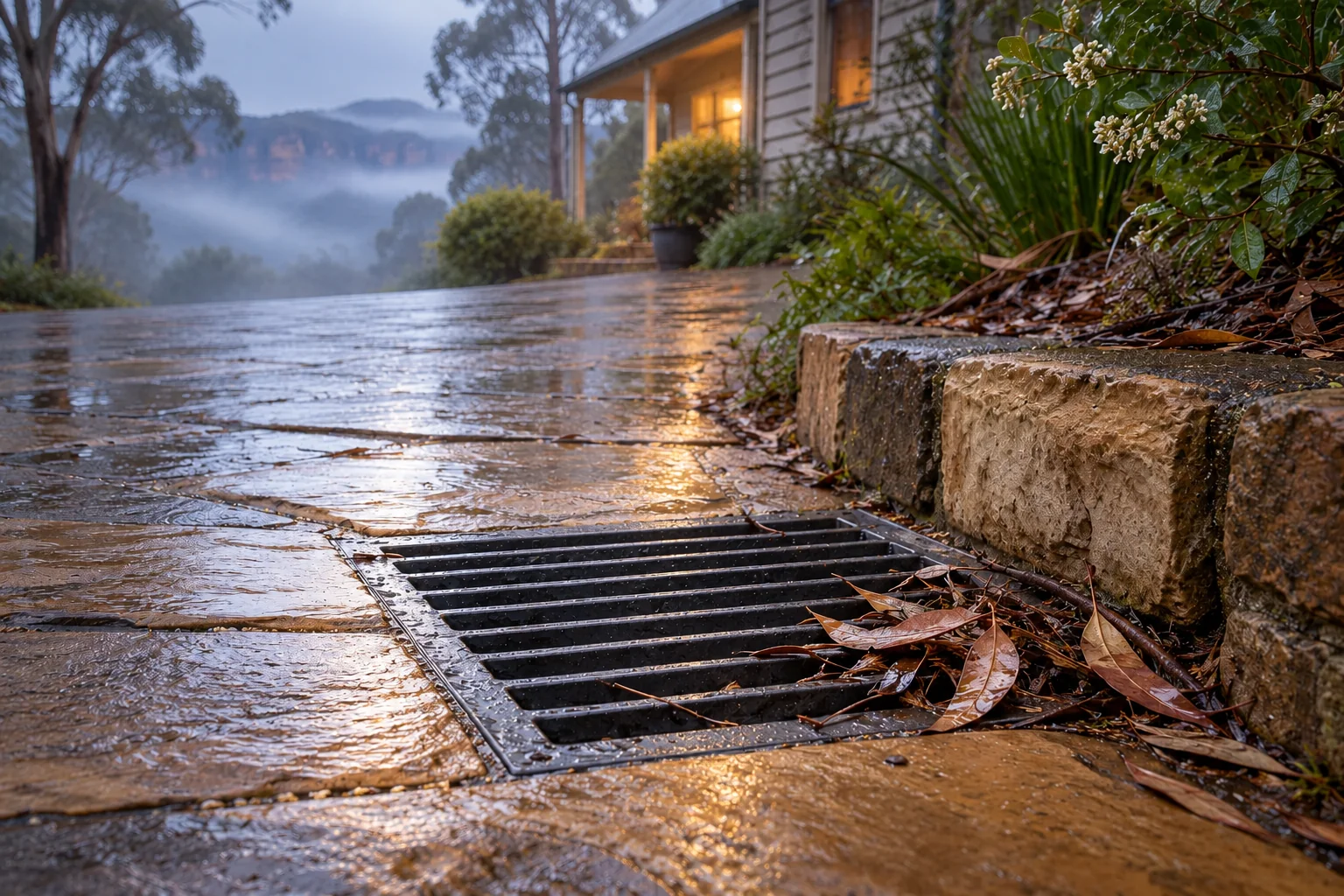
Where and when does water collect?
Explain whether ponding occurs beside a building, near a driveway grate, in a garden or at a downpipe connection. Mention whether it disappears shortly after rain or remains for longer. Safe photographs taken from a dry location can help describe the enquiry.
A clear grate is only part of the picture
Leaves and debris can collect at surface inlets, while a restriction may also be further along a pipe. Drainage performance can depend on the outlet and the wider layout. Ask the responding provider what needs inspection before choosing a clearing or repair approach.
Allow for property access
For Blue Mountains properties, describe steep paths, narrow side access, retaining walls and any inspection points you already know about. Confirm the scope of work and whether any further investigation is needed if the cause is not immediately visible.
Request help with stormwater drains. Include your suburb and what is happening. Send an enquiry or call 0490 008 212 to check availability.
Common questions
Is stormwater the same as sewer drainage?
No. Stormwater generally collects rainfall from roofs and paved or outdoor areas, while wastewater drainage serves household fixtures. Explain which system appears affected. Include where pooling starts, whether it follows rainfall and how long the water remains afterwards. Mention known pipe routes or previous drainage work if you have records. Ask whether the proposed assessment considers both the inlet and accessible outlet, and what would be needed if clearing does not explain or improve the problem.
Can a blocked stormwater drain be camera inspected?
A camera may be useful where access and pipe conditions allow. Ask a plumber whether an inspection is suitable for the particular drainage layout. Include where pooling starts, whether it follows rainfall and how long the water remains afterwards. Mention known pipe routes or previous drainage work if you have records. Ask whether the proposed assessment considers both the inlet and accessible outlet, and what would be needed if clearing does not explain or improve the problem.