Around the home · Reviewed 23 October 2026
How to describe ponding, blocked grates and stormwater drainage issues around your property.
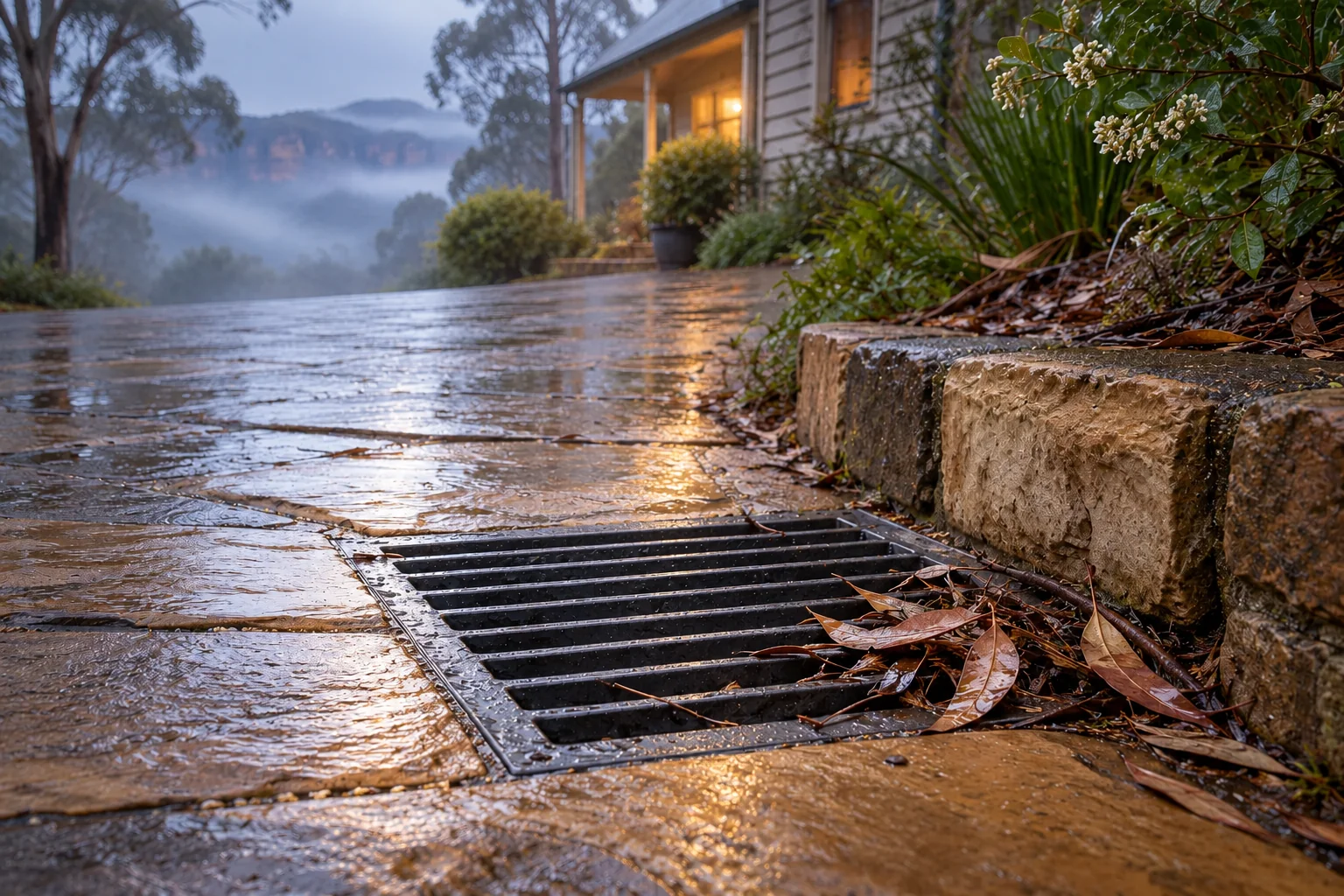
Record where the water gathers
Note the location of ponding and its relationship to nearby grates, pits, downpipes and buildings. If it is safe, take photographs from a dry location. Describe whether the water disappears after the rain or remains well afterwards.
Separate surface observations from pipe problems
Leaves on a grate are visible. A restriction deeper in a pipe may not be. The outlet, pipe condition and property layout may all need consideration. Avoid assuming that a visible collection of leaves explains the whole problem.
Explain access before a visit
Mention steep paths, narrow access, retaining walls, pets and any inspection points you know about. The provider can then discuss whether an assessment, clearing or further investigation is appropriate for the situation.
Ask what happens if clearing is not enough
Confirm the proposed work and what the provider will check afterwards. If the issue appears to involve layout or pipe condition, ask what additional information would help. Do not authorise a larger repair without understanding the scope, price and expected result.
Use wet reflections as a clue, not a diagnosis
A wet path can show the direction water appears to be travelling, but reflections alone cannot establish the cause of ponding. Note where water first accumulates, where it moves and whether the level continues to rise. A short description of those changes is more useful than a single photograph with no context. Do not stand in moving water to obtain a better view. The plumber may need to assess the inlet, pipe and outlet before deciding whether a blockage is the main issue.
Discuss the outlet as well as the inlet
A surface grate is only the visible start of a drainage route. Ask whether the assessment will consider where the connected pipe discharges and what can be accessed. If previous plans or repair notes are available, mention them rather than guessing the route. A drainage problem can require a wider assessment than clearing leaves from an inlet. Ask the provider to explain the limits of a proposed clearing service and the next step if flow does not improve as expected.
Prepare for the next conversation
For your Blue Mountains enquiry, give the suburb and identify the affected area in relation to the house, driveway or garden. Explain whether it happens in light rain or only heavier falls, without making assumptions about drainage capacity. Mention previous work and any known access restrictions. Ask for the assessment scope, charges and arrangements to be confirmed before attendance. Our stormwater service page provides the enquiry pathway; the drain-camera guide explains questions to ask if a camera inspection is proposed after the initial assessment.
What to record after the assessment
Keep a note of which drainage points were assessed, what work was completed and whether the provider checked flow afterwards. Ask whether any section could not be reached and what remains uncertain about the outlet or layout. If the issue only appears during rain, discuss how the result can be reviewed when those conditions recur. Do not assume that a dry-weather visit can reproduce every wet-weather symptom. Save relevant photographs with the date and a description of the conditions. If pooling returns, explain whether it starts in the same place and whether the affected area has changed. This gives the provider a useful basis for a follow-up conversation and helps distinguish the original concern from a new problem elsewhere on the property.
Ready to describe your drainage issue? Send an enquiry or call 0490 008 212 to check availability.